
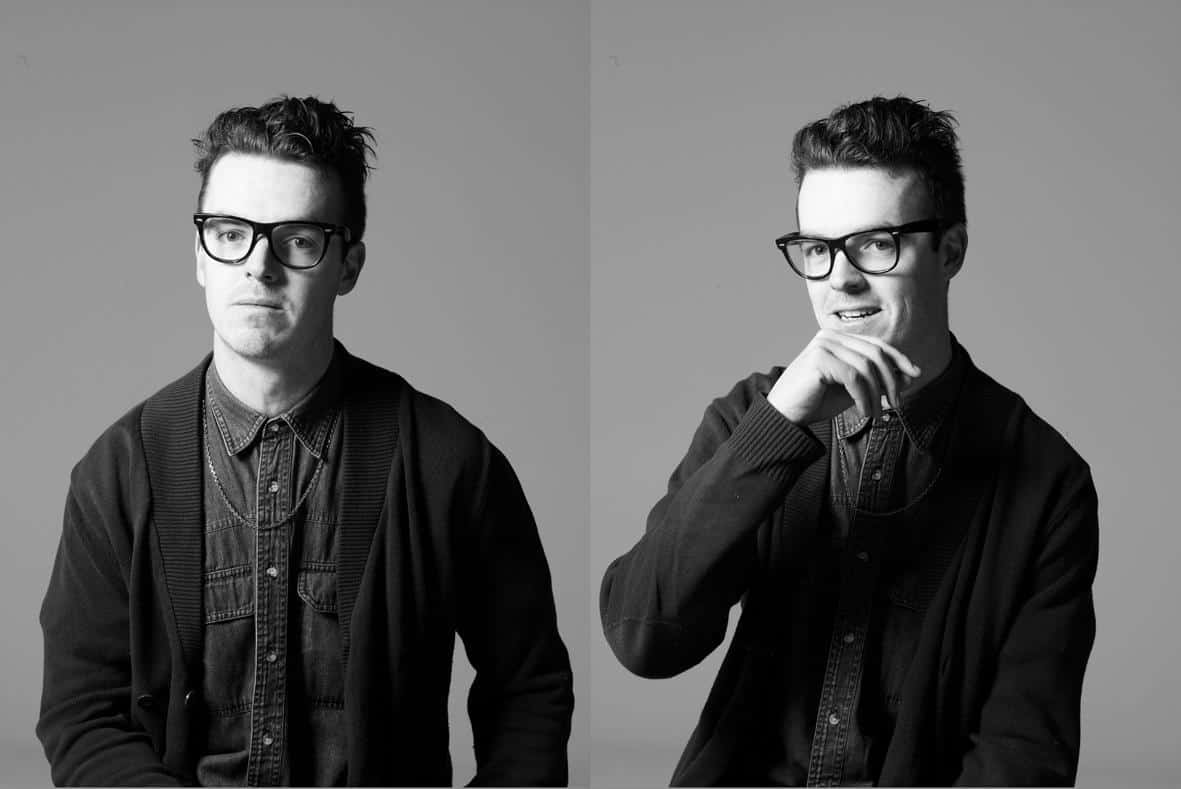
A while ago, I was lucky enough to interview designer Giles Miller for INSIDE, the monthly newsletter produced by WAN Interiors. The interview featured in issue 7. Below you can read the full interview in Q&A format.
Your interest in design was born out of your interest in boats and their integrated and adaptable interiors. Can you explain this?
The innovative storage and collapsible solutions found on boats has to be effective on a design level to make the most out of confined spaces. These systems are what first catalysed interest in designing spaces for me, and my work grew from there.
You actually started a degree in Business Management at Nottingham University before switching to a Furniture Design course at Loughborough. That is a pretty big change in direction. What happened?
Having originally decided (through my own naivety) that there would be more money to be made in business than in design, I enrolled in a Business Management course at Nottingham Trent Uni.
An excitable first year of uni combined with a general lack of interest in the course helped me realise that the only way for me to be productive in learning was to do something I enjoyed, so I pulled out, taught sailing for the summer and then enrolled in a furniture design course.
You continued on to do a Masters in Design Products at London’s Royal College of Art where the course was headed up by Ron Arad. To what extent did studying under such a celebrated design icon affect your approach to design?
Originally I used to reading many design magazines, and aspired to the likes of Ron and others including Tom Dixon and other ‘design stars’. His position on the course was obviously an attraction, but the Royal College is really a place to meet peers who will inspire you, and my fellow students and chums became the driving force behind the direction I took from there on.
Now I don’t read design magazines and prefer to concentrate on my own original design direction rather than be subconsciously manipulated by what others are doing.
Following your graduation, you co-founded Farm, a young British design collective composed of yourself and three of your colleagues from Loughborough. What was the idea behind Farm and how successful has it been?
Farm was born from a group of like-minded friends and designers who didn’t want to part ways after graduation. It formed a great platform for us all to showcase our work as a team and pool our resources.
We had some great opportunities together and even did a residency at London’s Design Museum, but I am now concentrating on my own personal direction. We still meet up, and contribute to each others’ work in many ways, so the energy that we always had as a group still remains.
You are probably most well-known for the work that you do with corrugated cardboard. How did you first become aware of the possibility of using cardboard to create furniture and home accessories?
During my BA course at Loughborough, I began working on my first self-directed brief, which was all about issues surrounding homelessness. I designed a range of products that could be given to the homeless for free, and the obvious medium was the all-accessible cardboard.
This sparked an interest in the materials properties, and next came a laptop bag for my computer, which I’d dropped some time previously. The cardboard would theoretically indent to take the force of the blow, and more products followed. The interest in this amazing and eco-credible material still expands all the time!
What is it about cardboard as a material that you like so much?
It has amazing structural properties and is so innovative and efficient that it is used everywhere. The result is that it is overlooked and I saw it as my mission to re-ignite the interest in this incredible and eco-friendly solution within product design.

Cardboard is not the most durable or hard-wearing of materials. How do you ensure that the products you create will stand up to everyday use and pass the test of time?
For me, one of the most important aspects of designing a new product is to be aware of its life and value, including the after-life or sourcing ends of the products existence.
Cardboard may not last as long as oak or other durable materials, but the material I use and the way I use it gives is more than enough durability to function as required for a reasonable product life. Once the product has served its purpose for a number of years, it can then be recycled in turn.
Cardboard is obviously quite an environmentally friendly material. How important is sustainability in the work that you do?
It has become very important to me, but my philosophy has now changed somewhat from when I first started raving about the eco-credentials of my work. As I have said I think it’s vital to consider the value of products.
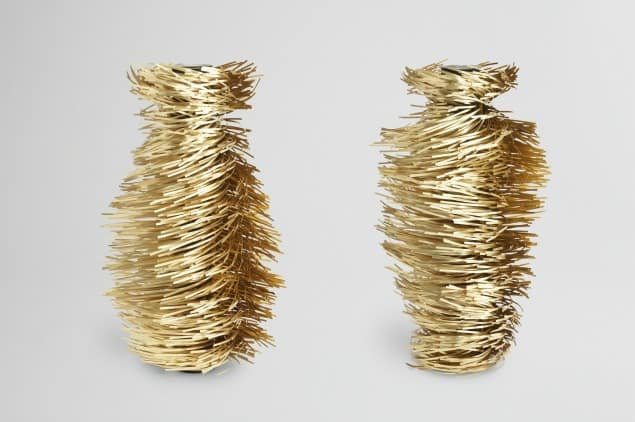
Of late I have been working in other materials, such as etched brass, ceramics and even plastics, in order to justify their own existence, and not having eco-materials these products are personally adaptable.
From a vase that can be shaped by the owner, to a wall that can have any pattern put into it, these objects are personal to the user, giving them value and therefore ensuring they are never reduced to landfill.
Last year you extended your portfolio to include a range of innovative surface finishes and materials for interior and architectural specification. Can you tell us about Giles Miller Surfaces and the range of materials that you are now using?
The concept of personal and adaptable wall surfaces expands on this idea of creating value in the work we produce. Our range of surfaces can be personalised with any imagery or patterns, and we do this by creating pixelated imagery using reflection rather than colour.
The result is innovative and intriguingly original surfaces that can be produced from any material the client should desire. It’s a very exciting development for me, as it is larger-scale work with some fantastic high-end clients.

You have been involved in some very exciting retail projects recently including installations you have created for Stella McCartney and Selfridges. How did these projects come about and what is it about your work that has been attracting the likes of Stella McCartney?
I have been very lucky in developing a working relationship with the Stella McCartney brand, and I think it’s down to my use of cardboard and its potential applications. Stella has very worthy views on sustainability, so the material suits her brand and ideas, but what we are able to do is create surfaces and finishes for her that incorporate her own imagery in an interesting and eco-friendly way.
The relationship started when they saw my furniture and asked if I could apply the same techniques to a wall covering. That in turn has led to a whole new world of development for me in my own work.
Are there any other retail environments in particular that you are currently working on or that you would like to work on in the future?
I am currently working on a pop-up shop for a fantastic brand of high-end fashion lingerie called Damaris, who are having a pop-up in Selfridges in London.
We’re also developing surfaces for a number of Hotels in London and abroad, including the Metropolitan Hotel and the Ritz-Carlton. These are really my dream clients, as they are creating wonderful spaces and the context for my work is visible from a huge number of customers and guests. That’s the most satisfying thing I think, that people will see the works we produce and enjoy them.